
The Impact of Local Land Economics on Forest Carbon Baselines
TL;DR: Baselines are economic forecasts of land-use behavior, so ignoring opportunity cost, enforcement probability, or dynamic land use makes additionality fragile. Reviewers stress-test whether alternative uses become attractive under plausible shifts. Explicit economic assumptions and scenario stress-tests make baselines durable.
Author: Benjamin Bishop - Sorus Consulting
Forest carbon baselines do not usually fail because of poor ecology. They fail because of poor economics.
At their core, baselines are behavioral forecasts. They describe how people are expected to use land in the absence of a project and how that use translates into carbon outcomes. When those behavioral assumptions are vague, implicit, or unrealistic, the baseline becomes fragile. Additionality then rests on a foundation that cannot support scrutiny.
This article explains why land economics are the most common hidden weakness in ARR baselines, how reviewers stress-test economic assumptions in practice, and how projects can stress-test baselines so they remain defensible over time.
Why baselines are economic models whether you admit it or not
A baseline answers a deceptively simple question: what would happen here without the project?
That answer implies choices. Who controls the land. What alternatives are available. Which option is most attractive under prevailing conditions. None of those choices are ecological. They are economic and institutional.
Even when a baseline is framed in biophysical terms, such as continued low biomass or slow natural regeneration, it embeds assumptions about incentives. It assumes that landholders either cannot or will not pursue alternatives that change carbon stocks.
Reviewers increasingly treat baselines as implicit economic models. If those models do not align with observable behavior or credible incentives, they unravel.
The illusion of static land use
One of the most persistent baseline errors is assuming that current land use will persist unchanged.
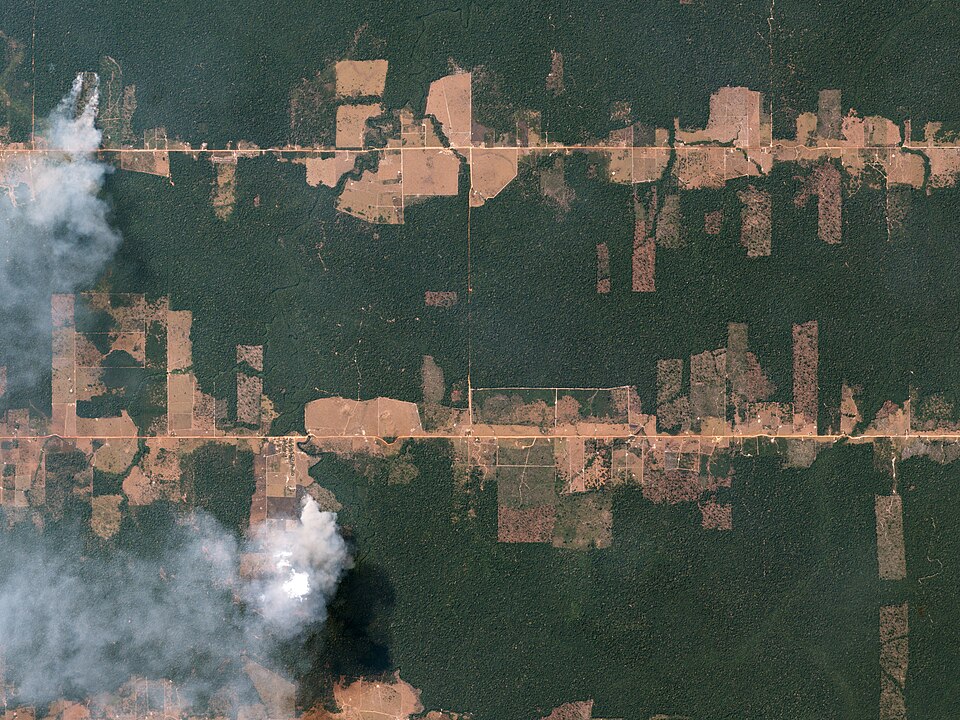
Land use is dynamic. It responds to prices, policies, access, labor availability, and expectations about the future. A pasture today may become cropland tomorrow. A degraded area may regenerate naturally once grazing pressure declines. A remote parcel may suddenly become valuable once a road is built.
Baselines that assume stasis often do so unintentionally. Developers extrapolate recent history forward without examining why that history occurred or whether conditions are changing.
From a diligence perspective, the problem is not uncertainty. The problem is unexamined certainty.
Opportunity cost as the load-bearing assumption
Opportunity cost sits at the center of baseline credibility.
Opportunity cost reflects what landholders give up by choosing one land use over another. If alternative uses are profitable, accessible, and legal, baselines that assume continued low-carbon use become difficult to defend.
Typical opportunity cost categories encountered in ARR projects include:
- Low-input grazing systems with modest but stable returns
- Smallholder mixed agriculture with higher but volatile returns
- Commercial plantations with higher returns but capital and risk constraints
- Speculative holding near infrastructure with returns tied to timing rather than productivity
These categories are not universal, but they illustrate why baselines that ignore opportunity cost are fragile. Even modest improvements in access or prices can shift land-use decisions.
Reviewers often test baseline credibility by asking whether the assumed land use would remain rational if conditions improved slightly. If the answer is no, the baseline requires stronger justification.
Enforcement probability matters more than rules on paper
Another common baseline weakness is treating land-use rules as binary.
Regulations exist in many jurisdictions that restrict clearing or encourage reforestation. Baselines sometimes assume those rules will either fully prevent alternative land uses or be entirely ignored. Reality is more nuanced.
Enforcement varies across space and time. It depends on local capacity, political priorities, and economic pressure. A baseline that assumes strict enforcement without evidence is as weak as one that assumes none.
From an economic perspective, what matters is enforcement probability. If enforcement is sporadic or penalties are low relative to potential gains, landholders may still pursue restricted uses. Conversely, improvements in enforcement can shift baselines even without new incentives.
Projects that fail to examine enforcement dynamics often overestimate or underestimate baseline change, either of which undermines additionality.
Land held in reserve is not abandoned
Remote sensing frequently identifies land that appears unused or degraded. Baselines often label such land as abandoned.
This is a dangerous assumption.
Land may be idle because owners are waiting for better conditions. Infrastructure expansion, policy reform, or market development can rapidly change land-use economics. In these cases, apparent inactivity is not evidence of low opportunity cost. It is evidence of timing.
Reviewers increasingly challenge baselines that equate inactivity with inevitability. Projects must explain not just what is happening now, but why nothing else would happen over the crediting period.
How economic blind spots undermine additionality
Additionality depends directly on the baseline. When economic drivers suggest that carbon stocks would increase anyway, the credited delta shrinks or disappears.
Under benchmark-based approaches, this effect is explicit. Benchmarks represent typical performance under prevailing conditions. If land economics favor reforestation or alternative high-carbon uses, the benchmark rises. Projects that fail to anticipate this dynamic find their additionality eroding over time.
Even under non-benchmark approaches, reviewers test whether baseline assumptions remain plausible as conditions evolve. Economic blind spots invite skepticism.
Stress-testing baselines instead of defending them
The most effective way to address economic risk in baselines is not to argue harder. It is to stress-test.
Baseline stress-testing asks which assumptions the credit volume depends on and how sensitive outcomes are to changes in those assumptions. This process does not eliminate uncertainty, but it makes it explicit.
A practical stress-test involves four steps.
- Identify a small number of plausible alternative land uses.
- Describe the conditions under which each alternative becomes attractive.
- Assess how carbon outcomes differ under each scenario.
- Examine how credit issuance responds.
This approach shifts the conversation from defensiveness to transparency. Reviewers are more comfortable approving projects that acknowledge risk than those that deny it.
Why MRV amplifies economic mistakes
Economic assumptions and MRV interact in subtle ways.
When baselines are economically optimistic, reviewers scrutinize MRV more aggressively. Sampling uncertainty, stratification choices, and measurement error all receive closer attention. Small MRV weaknesses become magnified when the underlying baseline is contentious.
Conversely, robust MRV can partially buffer economic uncertainty by providing high-confidence evidence of performance. This does not fix a flawed baseline, but it reduces skepticism about measured outcomes.
Projects that neglect MRV planning while relying on optimistic economic assumptions face compounding risk.
Financial consequences of weak baseline economics
Baseline credibility is not an abstract concern. It affects project finance directly.
Investors price uncertainty. Baselines that rely on fragile economic assumptions increase perceived risk, which raises the cost of capital or delays financing entirely. Buyers discount credits from projects where additionality appears borderline.
Market data consistently shows that projects with clear, conservative baseline assumptions reach offtake agreements more readily. Those agreements, in turn, unlock lower-cost capital and improve project resilience.
The cost of ignoring land economics often exceeds the cost of addressing it early.
Designing baselines for durability
Durable baselines share a few traits.
They make economic assumptions explicit. They explain why alternative land uses are unattractive or infeasible, not just absent.
They are conservative where uncertainty is high. Over-crediting early invites correction later.
They are revisited periodically. Conditions change, and baselines that remain credible evolve with them.
Most importantly, durable baselines treat land as an economic system embedded in social and institutional context, not as a static canvas.
Final thoughts
Forest carbon baselines are not ecological models with economic footnotes. They are economic models with ecological consequences.
Projects that recognize this early build baselines that survive scrutiny. Projects that ignore it often discover too late that their assumptions cannot be defended.
Land economics does not need to be predicted perfectly. It needs to be confronted honestly.
That is the difference between baselines that pass once and baselines that endure.