TL;DR: This glossary defines the core terms used in ARR project design, auditing, and crediting. Use it as a quick reference for baseline, additionality, MRV, permanence, leakage, and uncertainty concepts. Clear definitions reduce misalignment with validators, verifiers, and buyers.
Author: Benjamin Bishop - Sorus Consulting
A comprehensive glossary of ARR forest carbon terms, covering additionality, baselines, MRV, permanence, leakage, and verification under leading voluntary carbon standards.
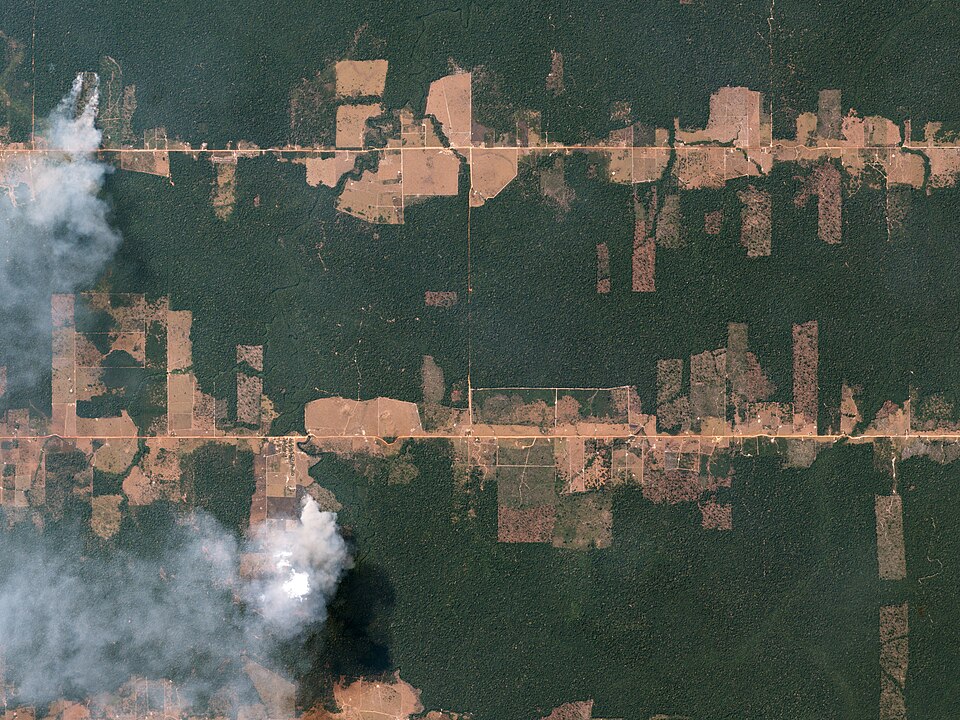
Additionality means that the credited carbon removals would not have occurred in the absence of the project, under the rules of the applicable methodology. In ARR projects, additionality is demonstrated through counterfactual analysis, benchmarks, or performance tests rather than intent or project quality alone.
Afforestation is the establishment of forest on land that has not been forested for a defined historical period. Afforestation projects are treated distinctly from reforestation because baseline assumptions and land-use trajectories differ.
A baseline is a forward-looking description of how land use and carbon stocks would change without the project. Baselines are forecasts, not descriptions of current conditions, and implicitly embed economic and institutional assumptions.
A baseline scenario means the specific modeled pathway of land use and carbon stocks used to quantify business-as-usual outcomes. Projects may test multiple scenarios but must justify the one selected.
Baseline stress-testing is the process of challenging baseline assumptions against plausible economic, policy, or behavioral conditions. Stress-testing helps identify which assumptions are load-bearing for credit volume.
A buffer pool is a shared reserve of credits set aside to compensate for unintentional reversals. Buffer contributions address statistical risk but do not prevent reversals or eliminate permanence risk.
A carbon pool means a reservoir of carbon, such as aboveground biomass, belowground biomass, dead wood, litter, or soil organic carbon. Methodologies specify which pools must be included based on materiality.
Carbon removal is the net transfer of CO2 from the atmosphere into long-lived carbon stocks. ARR projects generate removals through biomass accumulation and ecosystem recovery.
A carbon stock means the quantity of carbon stored in a defined pool at a specific time. Changes in stock, rather than absolute values, typically determine credited removals.
A confidence interval is a statistical range that expresses uncertainty around an estimated mean at a specified confidence level. In forest carbon projects, 90 percent confidence intervals are commonly required.
A conservative adjustment means a downward adjustment to credited carbon quantities to account for uncertainty or methodological limitations. Conservatism is a core principle in carbon accounting.
A crediting period is the span of time during which a project is eligible to generate carbon credits. ARR crediting periods often extend for decades to reflect forest growth dynamics.
A counterfactual means the hypothetical scenario describing what would have happened without the project. Additionality assessments rely on credible counterfactuals.
Degraded land is land with reduced ecological function or productivity due to past use or disturbance. Degradation alone does not establish additionality or baseline outcomes.
An emission reduction means a decrease in greenhouse gas emissions relative to a baseline. ARR projects primarily generate removals rather than reductions.
A forest is defined according to canopy cover, height, and area thresholds specified by the applicable standard. Definitions matter because they determine eligibility and baseline assumptions.
A forest carbon project means an intervention designed to increase or maintain forest carbon stocks and generate tradable credits. ARR is one category within forest carbon projects.
Leakage is an increase in emissions outside the project boundary caused by displacement of activities within it. Leakage reduces net credited benefits if not addressed.
Materiality means the threshold above which an emission source or carbon pool must be included in accounting. Immaterial elements may be excluded if justified.
Measurement error is uncertainty introduced by field measurement techniques, instrument precision, or observer differences. Measurement error contributes to total uncertainty.
Monitoring means the systematic collection of data to track changes in carbon stocks over time. Monitoring must follow documented protocols.
MRV means monitoring, reporting, and verification: the full system used to measure outcomes and support credit issuance. MRV quality determines audit outcomes.
Permanence is the likelihood that credited carbon remains stored for the required duration. It reflects disturbance risk, governance, and financial resilience.
A performance benchmark is a reference level representing typical outcomes under business-as-usual conditions. Benchmarks are used to demonstrate additionality in some methodologies.
A project boundary means the geographic area within which project activities and accounting occur. Boundary definition affects leakage and baseline assessment.
QA/QC means quality assurance and quality control procedures used to prevent, detect, and correct errors. Strong QA/QC increases audit confidence.
Reforestation is the re-establishment of forest on land that was previously forested. Baseline assumptions differ from afforestation.
A reversal means the loss of credited carbon due to disturbance or management change. Reversals trigger buffer compensation or other remedies.
Sampling design means the statistical approach used to select plot locations and sample sizes. Design quality directly affects uncertainty.
Sequential sampling is an adaptive approach where plots are added iteratively until precision targets are met. This approach improves efficiency.
Stratification means dividing a project area into more homogeneous units to reduce variance. Stratification must be justified and adequately sampled.
Uncertainty is a quantified expression of how far reported values may deviate from true values. Uncertainty affects credit issuance directly.
Validation is an independent assessment of whether a project design complies with applicable rules. Validation occurs before or early in implementation.
Verification means an independent assessment confirming that monitored results support credit issuance. Verification recurs throughout the crediting period.
